


Insider threats contribute to a significant number of data breaches. These cases of data exposure are enabled by a member of your staff, whether they intended to harm your business or simply made an honest mistake. With so much focus directed toward the threats out in the world, sometimes we forget that the biggest dangers can be among our ranks. To make up for this, we’ll discuss a few ways to keep insider threats from doing your business too much harm.
Global Tech Solutions Blog
The ability to vote is considered one of the great rights in the world, putting one’s voice and opinion into action to shape history. However, it has been demonstrated that the electronic voting machines that some states in the U.S. use simply aren’t secure enough to ensure that the democratic process is preserved.
There are many organizations in the world that simply can’t have cybercriminals and hackers interfering with their data. One of these organizations, CERN (whose acronym translates to the European Laboratory for Particle Physics) has far too powerful of a computer grid to allow hackers to access it. To keep it safe, CERN has deployed what may be the future of cybersecurity: artificial intelligence.
Considering how often hackers target financial credentials like credit card numbers and expiration dates, it’s not surprising that ATMs can provide a wealth of information to them. Hackers are willing to go exceedingly far just to get their hands on these credentials--including physically altering the devices themselves to install skimmers and other technology on them. Unless you know what to look for, it can be difficult to tell if a machine has been tampered with.
A surprising number of security issues come from inside your organization. User error on the part of the employee can present major problems for your workflow, data security, and the integrity of your business. User error could be something as simple as an employee clicking on the wrong links when they receive a suspicious email in their inbox, or if they are accessing data that they simply have no business accessing in the first place. Sometimes businesses will even completely forget to remove employee credentials when they leave a project or the company creating a breachable hole in your network. Regardless of the reason, user error can be a detrimental occurrence, and one which must be prepared for.
Most small businesses don’t have the luxury of an in-house IT department. Even if they do have one, it’s likely a small department run by a handful of folks who have their hands full with either implementation projects or simply staying afloat. With opportunities to invest in the improvement of your infrastructure few and far between, a network audit can help you identify where your network suffers most, and what you can do about it.
If you’ve watched the news lately, chances are you’ve seen the Equifax breach and the ridiculous fallout it has caused. Over 133 million personal records have been stolen. While it’s difficult not to feel individually victimized by such a breach, it’s important to remember that it’s often not your specific credentials targeted by hackers. Since businesses often hold onto valuable information, they have big crosshairs painted onto them. It doesn’t even stop there--any vendors or partners you deal with are also in danger of hacking attacks.
The 2016 United States presidential election was an ugly one for multiple reasons--chief among them the accusation that hacked voting machines could have altered the outcome of the election significantly. Thankfully, there are steps being taken to alleviate the worries that third parties might alter the outcome of such important events.
In the last few months, there have been several high-profile data security breaches that resulted in the theft of millions upon millions of non-public information records. Though much of the focus in the aftermath of the breaches was on personal identity theft and prevention, it’s important to keep in mind that not all the stolen data records target individuals. Business entities are also at risk. Vendors and partners that you do business with regularly will probably have record of your company’s non-public information, payment information, or tax ID number.
There are dozens of surveys and reports produced each year that evaluate digital threats and cybercrime. Not every publication applies to every business - but many of them do have some important take aways about the best practices of handling IT. Here’s few highlights from the 2017 Cyberthreat Defense Report that offer important insight for SMBs and their use of technology.
In February of 2016, President Barack Obama passed a Cybersecurity National Action Plan. The plan implemented near-term actions and developed a long-term strategy to enhance cybersecurity awareness and protections, protect privacy, and maintain public safety. Taking action against cybersecurity now will assist with ensuring economic and national security, as well as empowering Americans to take better control of their digital security.
Chances are, you’ve heard of spam, but many don’t know how to identify it in the first place, let alone work around it. Frankly, spam can cause some serious damage to your business if not properly dealt with. In today’s blog, you’ll learn what makes spam, “spam,” and how you can keep it from infecting your inbox.
Over the past several months, while watching the news or reading about business and technology, you’ve probably encountered a few words, such as ‘ransomware’ ‘exploit weakness’, and ‘security patch’. These terms are used often, and you may be confused as to what they really mean, and how they relate to you and the security of your business’ data.
It doesn’t matter which industry your organization falls into. Your business will always be susceptible to threats in some way, shape, or form. Therefore, it’s your responsibility to ensure that your business understands how to protect itself from these threats, before it’s too late. We’ll help you learn more about the various issues that you need to watch out for, and what you can do to stop them.
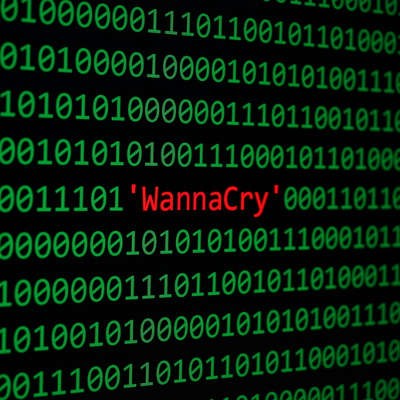
On May 11, 2017, the WannaCry ransomware spread around the globe like wildfire and disabled computing infrastructures belonging to organizations of all shapes and sizes. As the world watched the news unfold, it seemed as if practically no business was immune to this ultra-powerful ransomware. Yet, many quick-thinking organizations were. All because they had the foresight to follow IT best practices.
The Internet of Things is all around us, in our homes, our offices, and even our cars. While this connectivity can provide a more unified and automated approach to daily tasks, it has the downside of enabling certain security threats to go unfettered. A prime example are the IoT-driven botnets that seem to be increasing in popularity.
Microsoft has resolved what a security researcher tweeted was “the worst Windows remote code exec” in his memory. This vulnerability allowed a targeted file to implement remote code execution processes, manipulating the infected system and spreading the infection to other machines. In other word, it’s a bad problem to have. The scariest part: the attack would be triggered if a particular file were to be scanned by the Microsoft Malware Protection Engine.
How many emails does your organization receive every day? Chances are that you can’t find time in your day-to-day operations to maintain and manage your email solution as well as you’d like, and in a world where threats to your organization’s network lurk around every corner, you can never be too careful. How can you make sure that you’re taking proper care of your business’s email infrastructure, without sacrificing the time and manpower required to do so?